
Remote Blasting Machine
Wireless initiation technology built for safe-distance, controlled firing operations across demanding open-pit mining benches, tunneling headings, and high-wall quarry faces.
Engineered to completely isolate blasting engineers and technicians from flyrock danger zones, eliminate stray ground currents, and deliver encrypted two-way firing confirmation with military-grade telemetry.
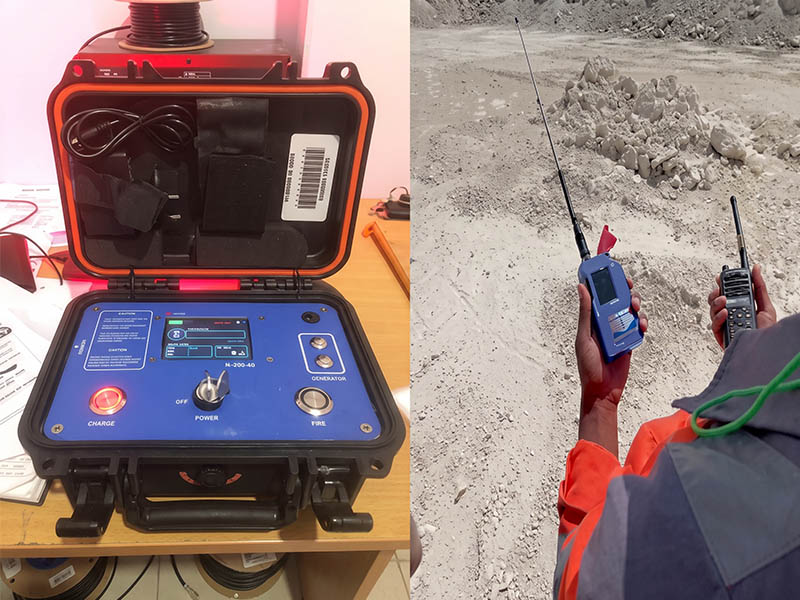
4 Core Pillars of Safe-Distance Remote Initiation
Eliminate traditional trailing lead lines, prevent misfires from lightning or stray earth potential, and standardize reproducible blast operations.
Safe-Distance Firing
Operators initiate blasts from a designated shelter, bunker, or command vehicle far outside the flyrock perimeter — safely removing blast crews from the active danger zone.
Reliable Signal Control
Separate Charge and Fire functions equipped with clear visual OLED status indicators, digital line impedance checks, and frequency-hopping spread spectrum (FHSS) rejection.
Operational Traceability
Supports consistent shot sequencing, circuit resistance validation, and automated timestamp logging required for mining inspectorate audits and corporate safety compliance.
Rugged Field Design
Weatherproof, shockproof portable casing engineered specifically for demanding, muddy open-pit benches, heavy tropical monsoon rain, and abrasive dust conditions.
Conventional Trailing Cable vs. Remote Blasting Machine
Compare traditional firing line vulnerabilities against the engineered safety of wireless initiation.
High Cable Hazards & Operational Delays
- Cable Severance Risks: Heavy haul trucks or crawler bulldozers frequently run over and break lead firing cables, causing expensive blast misfires.
- Lightning & Stray Current Ingress: Long unshielded firing lines running hundreds of meters act like antenna arrays, risking premature detonation during tropical thunderstorms.
- Restricted Stand-Off Distance: Cable reels typically limit crew distance to 300–500m, keeping blast personnel dangerously close to the flyrock buffer perimeter.
- Tedious Spooling Labor: Laying and reeling back 800m of twin-lead cable consumes up to 45 minutes of prime mine pit excavation time per shot.
Engineered Precision, Safe & Controlled
- Zero Physical Cable Vulnerability: Elimination of long trailing lead wires removes vehicle snags, severed line misfires, and cable recovery time completely.
- Total Stray Voltage Isolation: Base station terminals maintain automated zero-voltage shunt state until arming command is executed with matched encryption keys.
- Full Kilometric Safety Standoff: Operators command initiation safely up to 3,500m away inside protected pit access control shelters or vehicle cabs.
- Rapid 5-Minute Bench Setup: Quick hookup, instant resistance telemetry check, and rapid evacuation accelerate daily pit production cycles.
Ready to Elevate Blast Safety & Reliability at Your Pit?
PT Evara Trinitas Abadi technical services team is ready to conduct on-site demonstration trials, frequency surveys, and engineer training at your mining concession or civil project.